

Tanzania Volunteer Teaching Trip | The Night We Shared Our Stories
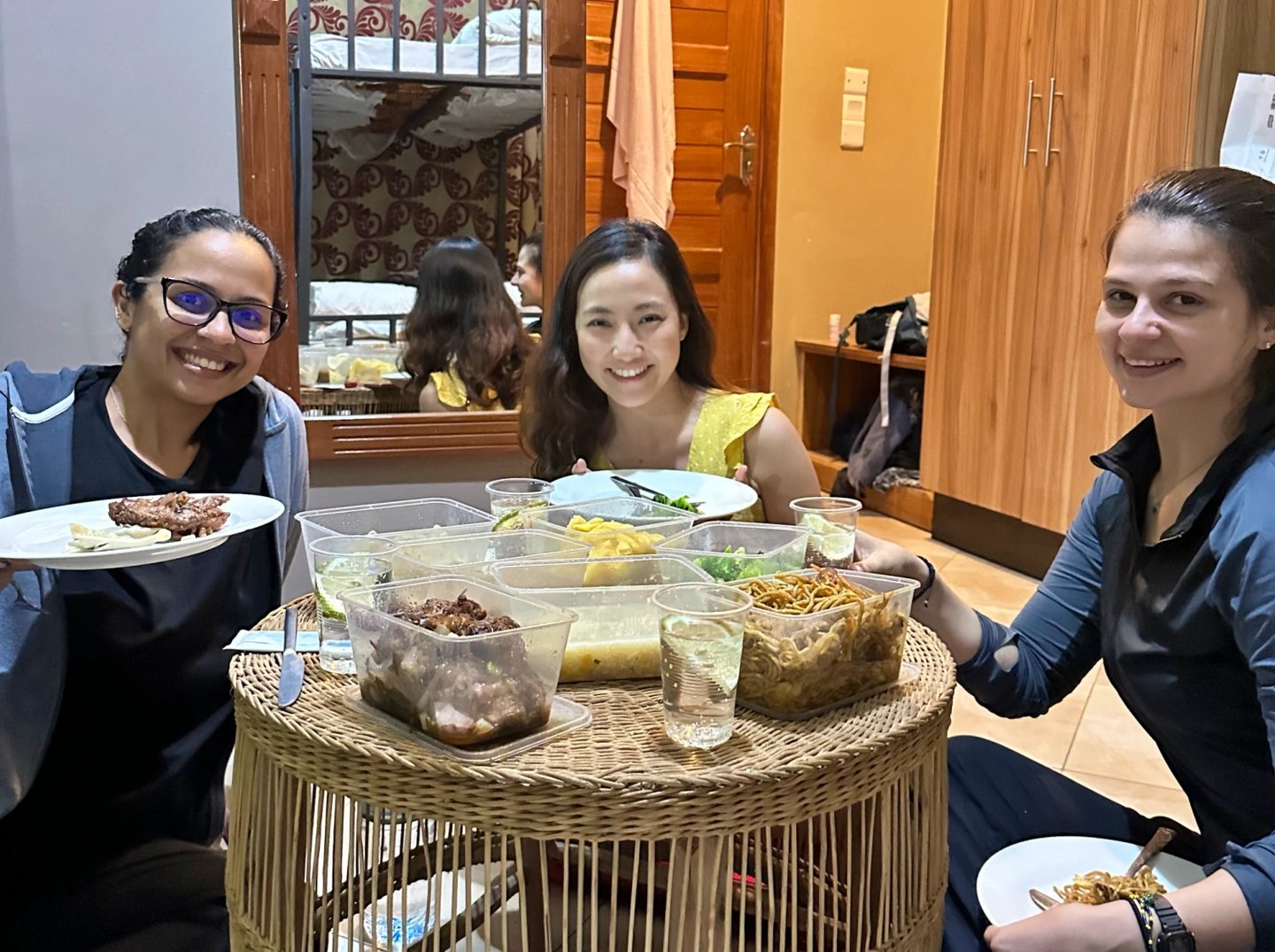
After two long days out, we returned to our dormitory. The four of us gathered around a table that evening with drinks in hand. As the conversation lingered, we found ourselves sharing stories we'd never told before. Each of us carried different pasts, heartbreak, betrayal, loss...But somehow, on the other side of the world, we found comfort in one another.
If you haven’t read the earlier parts yet, you can catch up here:
→ Travelling from Hong Kong to Arusha (IVHQ Experience)
→ The Three Rafikis
→ My First Day as Teacher
→A Girls’ Night That Meant More Than I Expected
→ Moshi Village Coffee and Ancient Underground Caves
→ Unexpected Encounters, Meaningful Chats
Happy Hour
Some evenings stay with you long after the journey is over.
One night in Tanzania, the four of us ordered Chinese takeaway back to the our dormitory, and I mixed everyone a Gin & Tonic. As the evening unfolded, our conversation slowly drifted away from the usual travel stories and into places far more personal. One by one, we found ourselves speaking about the parts of our lives we rarely shared with anyone else.
Past heartbreaks. Family wounds. Friendships that had quietly fallen apart. The kind of memories that never really disappear, but simply learn to live inside us. It felt like one of those beautifully ordinary scenes where nothing dramatic happens, yet somehow everything changes.
If you believe in fate, perhaps there was a reason the four of us ended up around that table. We came from different countries, grew up in different cultures, and carried completely different life stories. Yet beneath all those differences, there was something strangely familiar about one another. Each of us had our own trauma. Yet it wasn't our pain that brought us to Tanzania. It was our decision not to let it define us.
Pain has a way of changing people. Some become quieter. Some build walls. Some spend years searching for what was lost. Yet somehow, all four of us had arrived at the same conclusion: that despite everything, the world was still worth believing in. Perhaps that was why we had all found our way to Tanzania.
At one point my roommate said, 'People come and go. If we cling to the past, we don't leave room for the wonderful people who are still waiting to enter our lives.' It sounded almost too simple, yet it stayed with me for the rest of the trip. Looking around that table, I realised how little we ever know about the people sitting across from us. Some carry their pain so lightly that you'd never guess it was there. We admire their laughter without knowing what it takes for them to smile again.
Returning to the Classroom
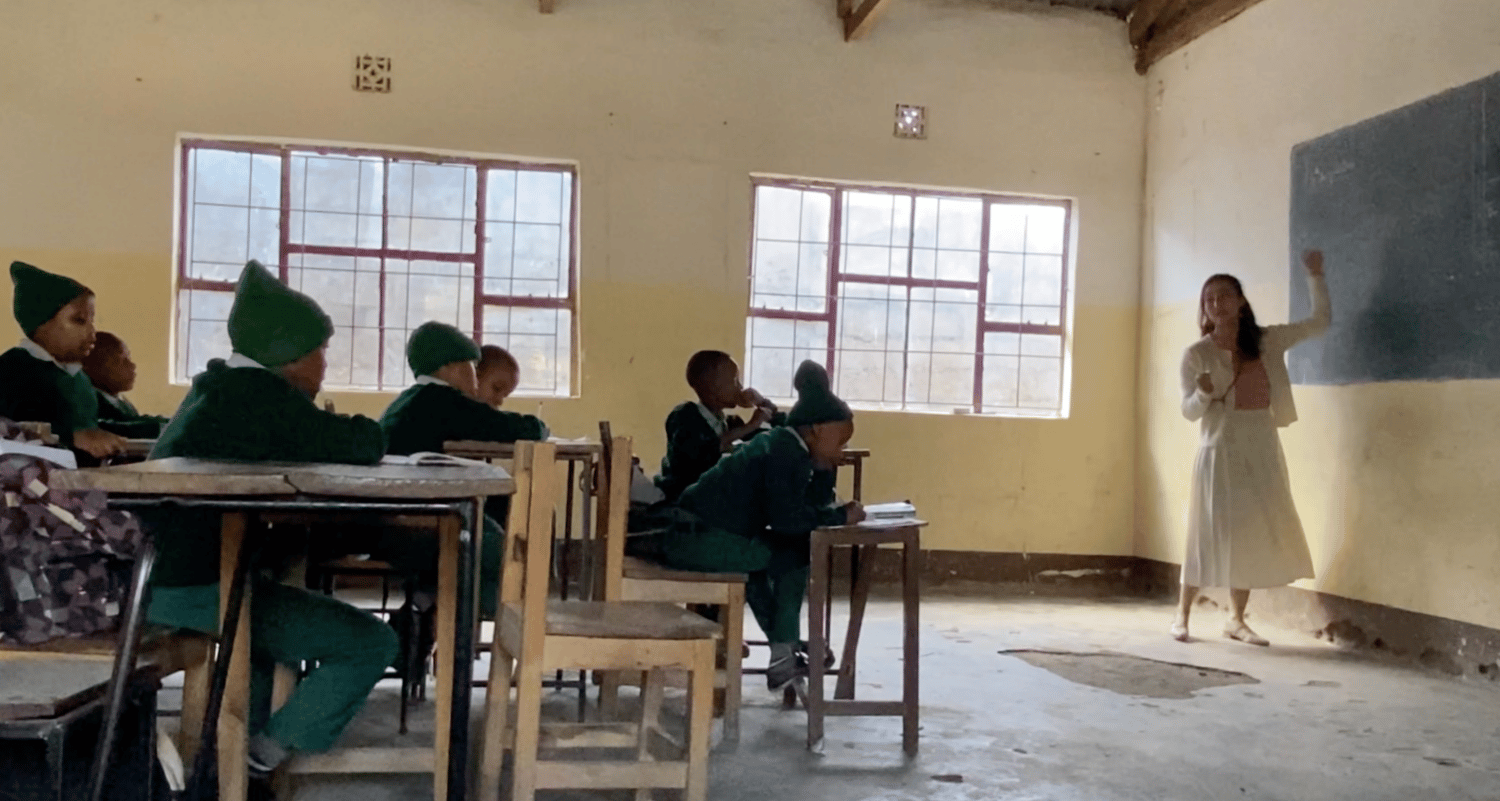
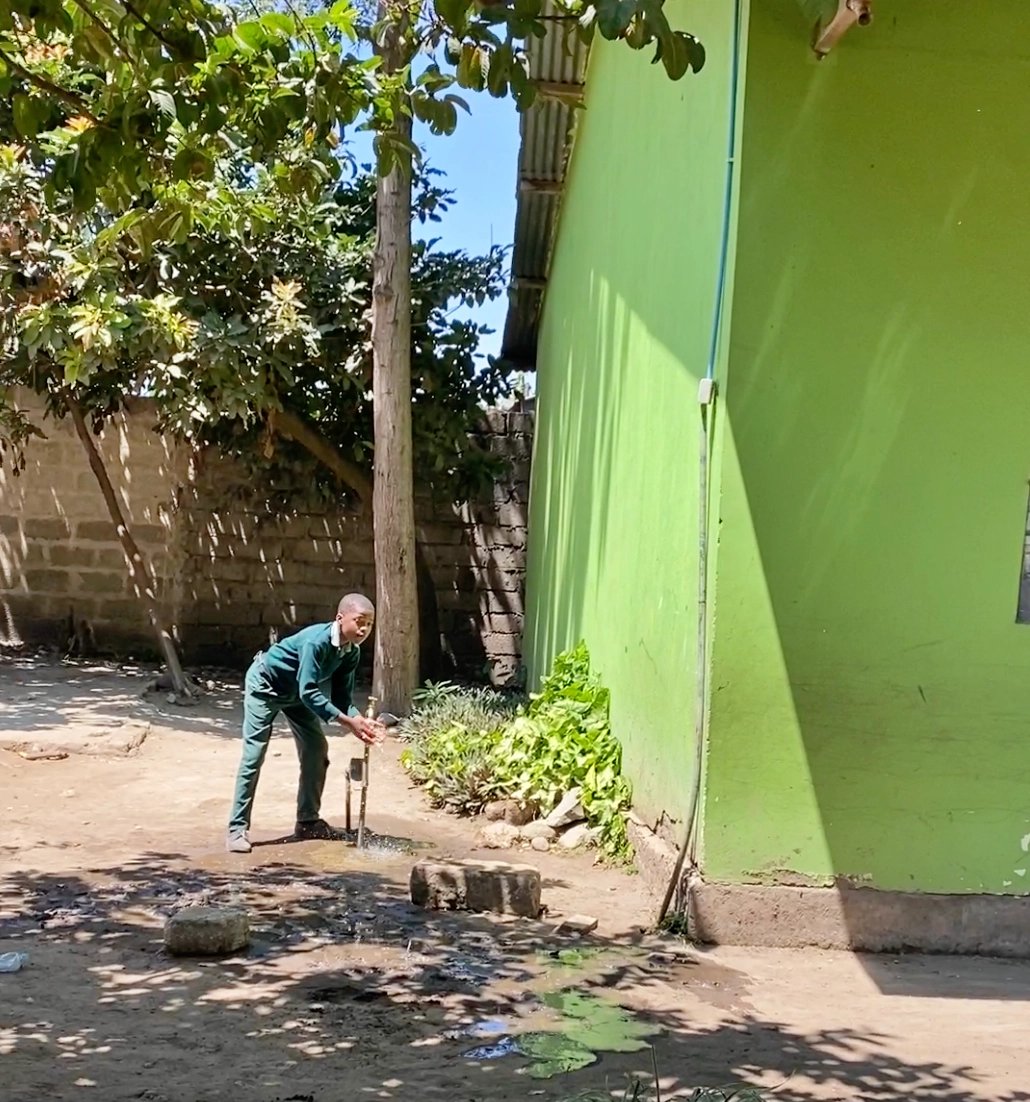
The next morning, we returned to school feeling a little lighter. Perhaps it was because we had already spent some time together, the children no longer looked at us with the same cautious curiosity. Some waved as we walked past, while others called out, 'Hello, Miss!' During the morning break, a few even came running over to ask, 'Miss, will you come to our class after the break?' Somehow, the classrooms already felt warmer than they had the day before.
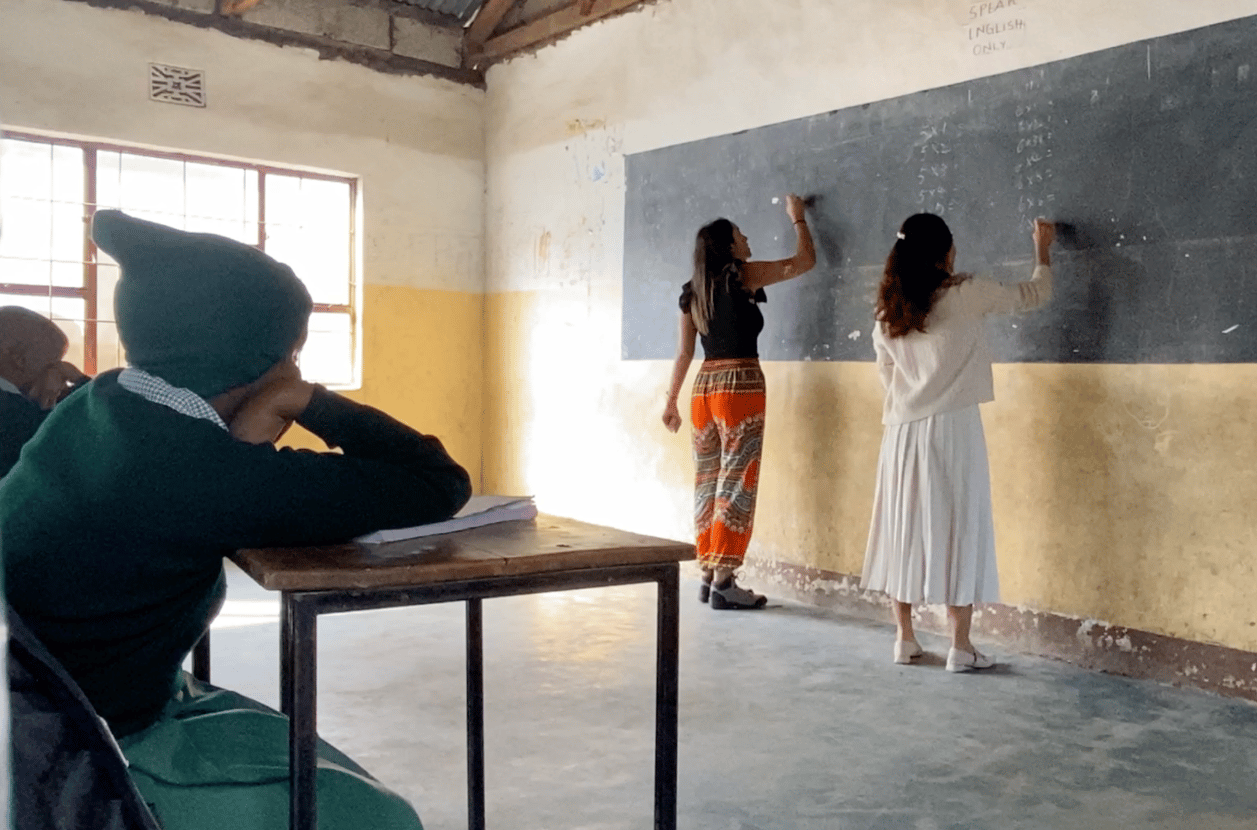
That morning, Carolina, the volunteer from Portugal, decided to teach multiplication. I was watching as she worked through 8 × 8 on the blackboard. Instead of reciting the answer from memory, she showed the students how to reason their way towards it: Eight times ten is eighty. Eight times two is sixteen. Eighty minus sixteen gives you sixty-four.
Something about that moment caught me by surprise.
So this is how many children outside Hong Kong learn multiplication? Rather than memorising patterns, they are encouraged to break numbers apart, piece them back together, and discover the answer through logic.
Growing up, we learned multiplication through the Chinese multiplication rhyme (九因歌), which is like a jungle that generations of children have committed to memory. '八八六十四' ('Eight eights are sixty-four') was something we can shout out immediately without even calculating; it simply lived in our heads, almost like the lyrics of a familiar song. We simply knew.
Looking back, I can't help feeling that whoever created the multiplication rhyme centuries ago gave generations of children an extraordinary gift. Without it, perhaps we too would have to do calculation every single time, rather than recalling the answer in an instant.
Watching her teach also made me think about something much bigger than mathematics. Language quietly shapes the way we learn. In Chinese, numbers make lexical sense with clear logic: ten plus one becomes shí yī ('ten-one'), ten plus two becomes shí èr ('ten-two'). Everything builds naturally upon what comes before it. English, on the other hand, asks children to accept words like eleven and twelve without offering much explanation.
As I sat there listening to Carolina patiently guide the class through each step, I found myself seeing my own culture through someone else's eyes. The things we take for granted often fade into the background of everyday life, unnoticed until we encounter another way of doing them.
Some Wounds We Thought Had Healed
After placement ended, I dragged my tired body back to the dormitory, only to find my roommate Indian girl already waiting for me for lunch. We sat together on the edge of our beds, holding our takeaway boxes, and slowly returned to the conversation from the night before. I never intended to share too much about myself. But as I listened to her open up, something inside me quietly resonated. Before I knew it, I found myself adding a few words of my own, simply wanting to tell her: 'I understand you, because I have been through something similar.'
I had barely finished my sentence when my throat suddenly tightened. Before I could even process what was happening, tears began falling down my face. I froze for a few seconds, trying to take a deep breath and regain control, but the emotions I had kept tucked away seemed to have found their own way out. Through tears, with my voice trembling, I whispered, 'I didn’t expect I would cry on this trip...'
She didn’t say much. She simply put down her food, opened her arms, and gently said, 'Come here. Let me give you a hug.'
For once, I didn’t hesitate. I just leaned into that embrace. I rarely cry in front of people, let alone someone I had only known for a few days. But as she held me, I suddenly realised that vulnerability did not always have to be something we hide. Sometimes, it can be something another person quietly holds for us. There was no need for long explanations, no need to find the perfect words or pretend that everything was fine. I was simply allowed to have a moment to fall apart.
Looking back, I don’t think those tears came from sadness alone. They felt more like a release. The things I had kept buried for so long, the stories I had never found the courage to share, had finally been given a place to exist through our conversations the night before. Perhaps we often convince ourselves that we have already healed, that we have moved on from the past. But some wounds are not truly gone; they are simply waiting quietly for the right moment, and the right person, to remind us that it is safe to feel again.
After wiping away my tears, I joked that such a dramatic emotional moment was probably the most 'Pisces' thing I could possibly do. We both laughed, and just like that, the room slowly returned to its usual warmth and everyday chaos.
A Small Test of Friendship
After lunch, my roommate and the Seychellois girl from headed to the local market. They wanted to buy some souvenirs, as well as some stationery and supplies to give to their students. I wanted to join them, but I still had some freelance work to finish, so I stayed behind with my laptop instead. We agreed to meet at a nearby restaurant at 7pm.
But things took longer than expected. By the time they returned, it was already past eight. They looked exhausted, their smiles carrying the tiredness of a long day. Standing by the doorway, my roommate asked, 'Should we just order takeaway tonight? We can go to that fancy restaurant tomorrow instead.'
But the thing was, I really wanted to go out. Perhaps it was something I have developed through travelling. Whenever I arrive somewhere new, I always want to find a good restaurant, sit down properly, and taste a little piece of the place. For me, a meal is never just about filling my stomach. It is almost a small ritual, a way of saying goodbye and creating one more memory before leaving. I only had a few more days left in Tanzania, and I wanted to experience more of the local life outside our volunteer bubble.
But I also knew they were genuinely tired. And deep down, I knew that if I insisted on going out, they would probably still come with me.
I was struggling. I sat there quietly, holding my phone, wondering how to express what I wanted.
Perhaps this is how friendships are truly tested. Not through dramatic conflicts, but through these small, ordinary moments when two people’s needs are different. There was no right or wrong. We simply wanted different things at that particular moment. And perhaps what mattered most was never the final decision itself, but how we chose to care for each other.
So how did the three of us eventually resolve this little dilemma? Stay tuned for the next chapter.
Check out the next chapter of my journey→: Drive into the Unknown: Misadventure in the Dark